




Gluten Free Bread Recipe. If you’ve baked gluten-free bread before, you already know the heartbreak. The loaf looks promising. It smells right. Then you slice it—and it collapses into crumbs like damp sand.
This best gluten free bread recipe exists to end that cycle.
We’re not chasing “good for gluten-free.” We’re chasing real bread behavior: flexible slices, a tender crumb, and a loaf that bends instead of shattering. This is the kind of bread you can fold around a sandwich without holding your breath.
And yes—it’s also an easy gluten free bread recipe, once you understand why it works.
The Science of a Soft Crumb
Gluten’s job is structure. It traps gas, stretches without tearing, and sets into a network once baked. When you remove it, you must replace both strength and elasticity—not just one.
That’s where most recipes fail.
Why Psyllium Husk Changes Everything
Psyllium husk forms a gel when hydrated. That gel:
- Mimics gluten’s stretch
- Holds moisture during baking
- Prevents the crumb from drying out overnight
When mixed properly, the dough feels springy and elastic, not pourable. You should be able to stretch it slightly without tearing. That’s the moment you know you’re on the right track.
Xanthan gum helps, but psyllium does the heavy lifting here.
Our Ultimate Gluten Free Bread Recipe
This is a yeast bread with structure, flexibility, and a clean flavor—no overpowering yeast smell, no gummy center.
Ingredients
- 2 ½ cups gluten-free flour blend (use a high-quality blend; King Arthur gluten free bread flour is an excellent benchmark)
- 2 tbsp psyllium husk powder
- 1 ¼ cups warm water (about 105°F)
- 2 tbsp olive oil
- 1 tbsp honey or sugar
- 2 tsp instant yeast
- 1 tsp salt
- 1 tsp apple cider vinegar
Instructions
- Activate the structure
Whisk psyllium husk powder into warm water. Wait 60 seconds. It should thicken into a gel—like loose jelly. - Mix dry ingredients
In a bowl, combine flour, yeast, salt, and sugar. - Build the dough
Add psyllium gel, oil, and vinegar. Mix until a smooth, elastic dough forms. It should feel tacky but cohesive, not runny. - Shape and rise
Scrape into a greased loaf pan. Smooth the top with wet fingers. Cover and let rise 45–60 minutes, until slightly domed. - Bake
Bake at 375°F (190°C) for 45–50 minutes.
The loaf should sound hollow when tapped and feel firm all around. - Cool completely
This matters. The crumb finishes setting as it cools. Slice too early and you’ll think it’s underbaked.
What You’ll Notice
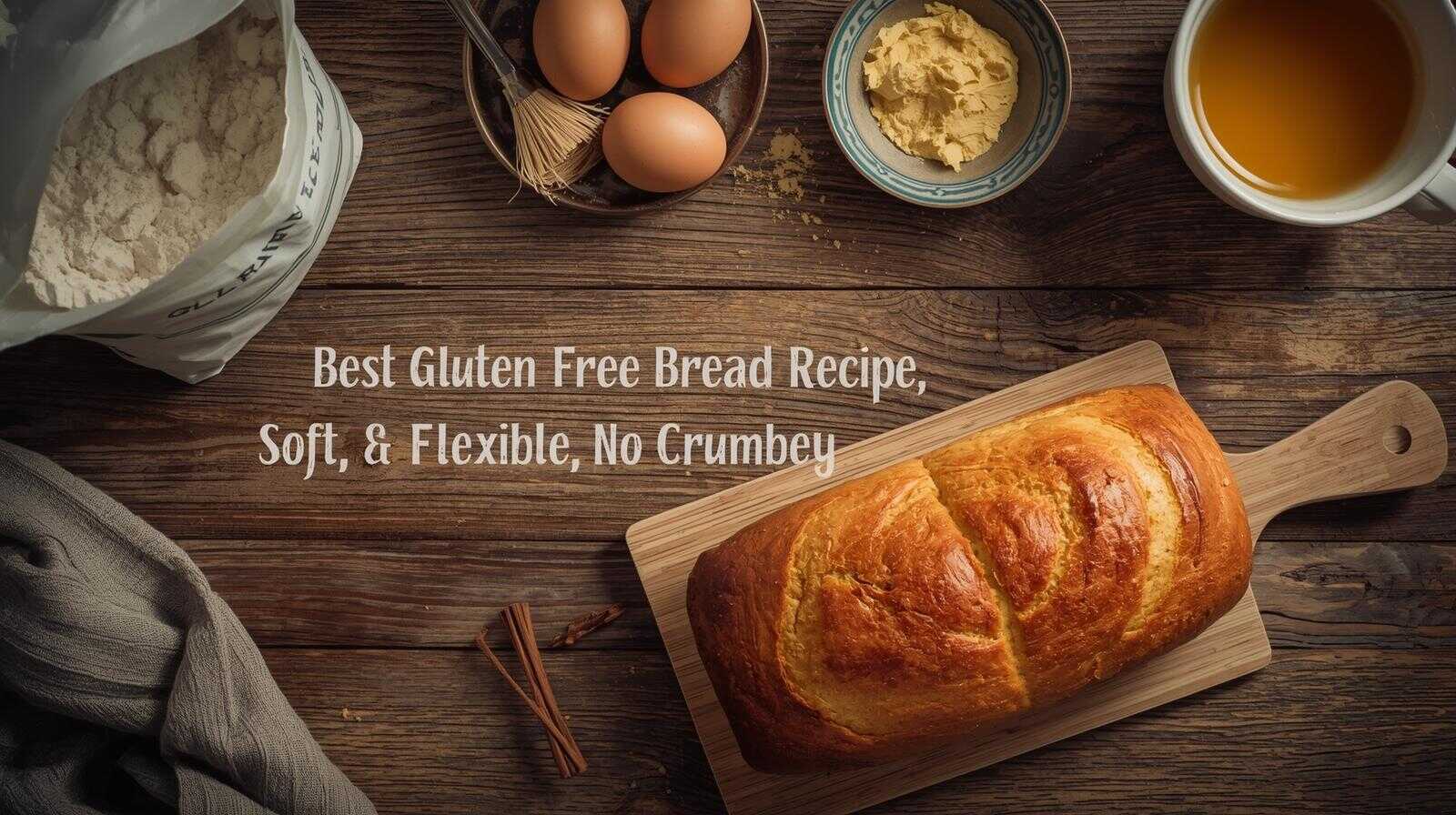
- Thin, soft crust that crackles faintly when tapped
- An airy, even crumb
- Slices that bend without breaking
That’s the goal of a true gluten free bread recipe done right.
Quick Adjustments for Your Kitchen
Bread Machine Success
Yes, this works as a gluten free bread recipe for bread maker—with a few rules.
- Use the gluten-free setting
- Add wet ingredients first
- Scrape down the sides during the first mix
- Do not add extra flour
The dough should look thicker than cake batter but softer than wheat dough. Trust the texture.
No Yeast, No Wait
If you’re searching for a gluten free bread recipe no yeast, understand this first:
You will not get the same chew or flexibility.
Yeast-free loaves are quick breads. They slice well, but they don’t stretch.
Quick Alternative
- Use baking powder instead of yeast
- Increase oil slightly
- Expect a tender, cake-like crumb
These are fine for toast or breakfast—but not sandwiches that need folding.
What About 4-Ingredient Gluten Free Bread Recipes?
You’ll see the promise everywhere: 4 ingredient gluten free bread recipe!
Here’s the truth—those recipes usually rely on:
- Eggs for structure
- Yogurt for moisture
They work… briefly. Then they dry out. Or collapse by day two.
Great bread needs hydration control, structure, and time. Cutting corners cuts texture.
Why Most Gluten Free Bread Recipes Fail
Most gluten-free bread recipes fail for one simple reason: they treat GF dough like wheat dough. It isn’t. Gluten-free dough needs hydration, structure, and time to set properly. When recipes cut corners—too little binder, too much starch, or rushed baking—you end up with loaves that crumble or turn gummy in the center.
Another common issue is imbalance. Too much rice flour dries the crumb. Too much starch makes it sticky. Great gluten-free bread lives in the narrow space between the two.
What the Dough Should Look and Feel Like
This dough will surprise you. It won’t be kneadable, but it also shouldn’t pour.
You’re aiming for:
- Thick and elastic
- Slightly sticky, not wet
- Stretchable without tearing
If it feels like cake batter, it’s too wet. If it feels stiff or cracks when shaped, it needs more hydration. Texture tells the truth faster than measurements ever will.
How to Get a Better Rise Without Overproofing
Gluten-free dough rises differently. It doesn’t double like wheat dough—and that’s normal.
A perfect rise looks like:
- A gentle dome
- Small surface bubbles
- Slight jiggle when tapped
Overproofing causes collapse after baking. When in doubt, bake earlier. The oven provides the final lift.
READ MORE >>> Gluten Free Bagels: The Ultimate Guide That Don’t Taste Sad
Best Pans for Gluten Free Bread
Pan choice matters more than people realize.
- Metal loaf pans bake evenly and set structure faster
- Glass pans often cause underbaked centers
- Pullman pans create professional sandwich slices
Always grease well. Gluten-free dough sticks harder than wheat dough ever will.
How to Make Gluten Free Bread Softer the Next Day
Fresh GF bread is great. Day-two bread is the real test.
To keep it soft:
- Store tightly wrapped
- Refrigerate, don’t leave on the counter
- Toast lightly before eating
A quick warm-up reactivates moisture trapped by psyllium, bringing the crumb back to life.
Can You Make This Recipe Dairy-Free or Egg-Free?
Good news—this recipe already is.
No dairy. No eggs. No compromises.
That’s another advantage of psyllium-based structure. It replaces eggs without turning the bread rubbery or fragile, making it ideal for multiple dietary needs.
Flavor Variations That Actually Work
Once you master the base loaf, variations are easy.
Popular options:
- Olive oil + rosemary
- Cinnamon + honey
- Garlic powder + herbs
Add dry flavorings with the flour. Add wet ingredients sparingly. Flavor should enhance the bread, not weigh it down.
Why This Bread Tastes Better Toasted
Gluten-free bread shines when toasted.
Heat:
- Sets the crust
- Enhances flavor
- Improves bite resistance
If a GF loaf can toast well without drying out, it’s a sign the structure is right.
How This Compares to Store-Bought Gluten Free Bread
Store-bought loaves rely on preservatives and gums to survive shipping. This recipe relies on hydration and balance instead.
The result:
- Less chemical taste
- Better flexibility
- Cleaner crumb
It’s bread made to be eaten—not stored for months.
Who This Gluten Free Bread Recipe Is Best For
This recipe is ideal if:
- You want real sandwich bread
- You’re tired of crumbly slices
- You want consistent results
If you’re looking for a microwave mug bread, this isn’t it. This is bread with standards.
Troubleshooting & Expert Tips
- Gummy center?
Too much water or sliced too soon. - Loaf collapsed?
Over-proofed or weak flour blend. - Dry texture?
Not enough psyllium—or poor-quality flour. - Strong yeast smell?
Too much yeast or too warm a rise.
Good gluten-free bread is about balance, not shortcuts.
Can I substitute the flour blend?
Yes—but blends vary wildly. Stick close to a balanced mix with protein and starch.
Why did my loaf sink after baking?
The structure wasn’t strong enough. Increase psyllium slightly or shorten the rise.
How should I store it?
Wrap tightly and refrigerate up to 5 days. Freeze slices for best texture.
Conclusion
This isn’t just another recipe—it’s a reset.
This best gluten free bread recipe gives you a loaf that bends, slices, and survives a sandwich press without falling apart. It’s soft, flexible, and forgiving—the way bread should be.
Slice it warm. Listen to the crust.
Then make a sandwich without fear.