








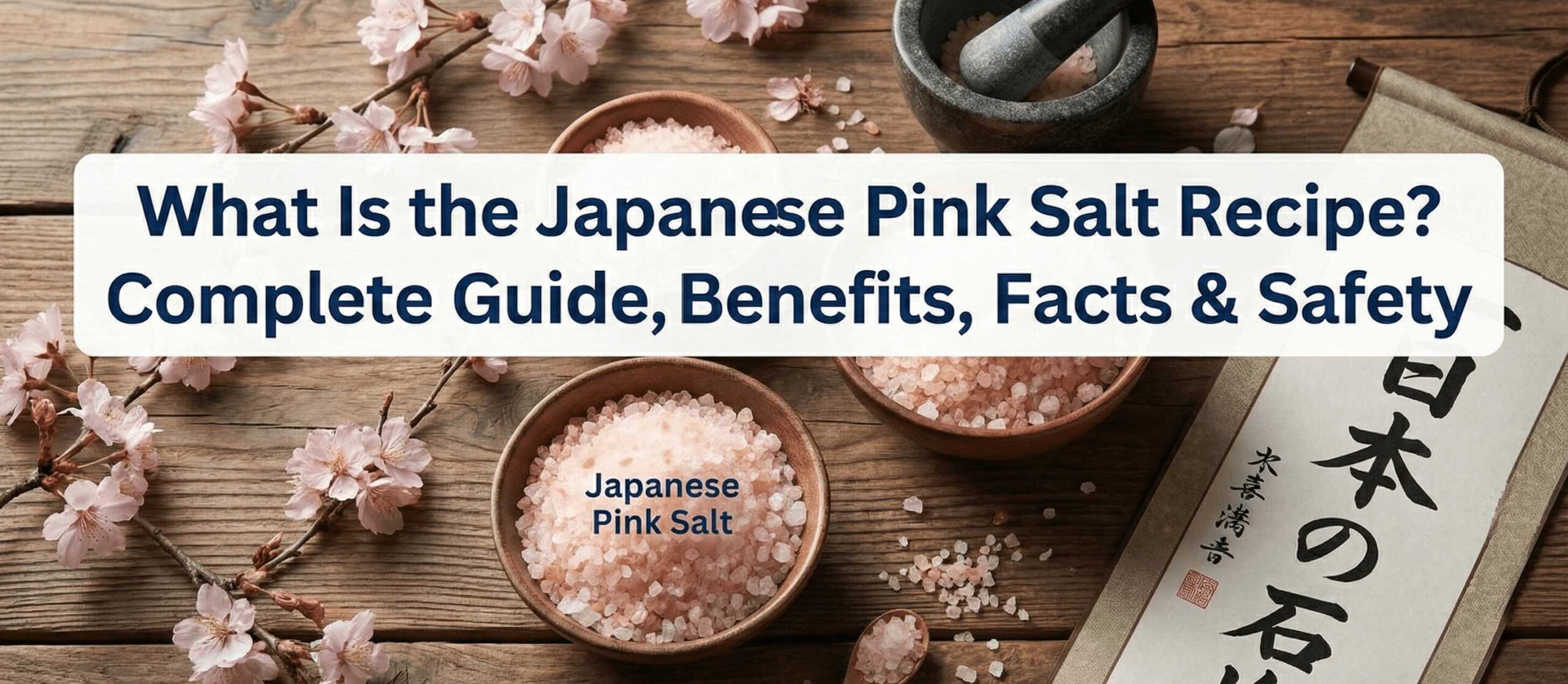
What is the Japanese pink salt recipe is a question many people are searching for as this wellness drink gains popularity online. It’s often described as a simple morning drink that supports hydration, digestion, and sometimes weight loss. However, there’s also confusion around its origin, effectiveness, and safety.
This article explains what the Japanese pink salt recipe really is, how to prepare it, why it’s called “Japanese,” what benefits are realistic, and what science and health experts actually say.
What Is the Japanese Pink Salt Recipe?
The Japanese pink salt recipe is a simple salt-water wellness drink made by mixing a small amount of pink salt (most commonly Himalayan pink salt) into warm water. Some versions include lemon juice, honey, or ginger.
It is usually consumed:
- In the morning
- On an empty stomach
- As part of a wellness routine
Despite the name, it is not a traditional Japanese recipe. The term “Japanese” is mostly used for branding and wellness appeal.
Why Is It Called “Japanese” Pink Salt?
This is one of the most misunderstood parts of the recipe.
Important facts about the name:
- The pink salt used is usually Himalayan pink salt, not Japanese salt
- Japan traditionally uses sea salt, not pink salt
- The word “Japanese” suggests balance, simplicity, and mindful living
Key takeaway:
The name is more about marketing and lifestyle association than historical accuracy.
Ingredients Used in the Japanese Pink Salt Recipe
The recipe is minimal and customizable.
Core Ingredients
- Pink salt (usually Himalayan pink salt)
- Warm water
Optional Add-Ins and Their Purpose
| Ingredient | Why People Add It |
|---|---|
| Lemon juice | Flavor, digestion support |
| Honey | Mild sweetness, quick energy |
| Ginger | Warming effect, gut comfort |
| Matcha | Antioxidants, light caffeine |
Pink salt contains trace minerals like magnesium, potassium, and calcium, but only in very small amounts.
How to Make the Japanese Pink Salt Recipe
Step-by-Step Preparation
- Warm 1 cup (240 ml) of water
- Add ¼ teaspoon pink salt
- Stir until fully dissolved
- Optional: add lemon juice or honey
- Drink slowly
Best Time and Frequency
- Best time: Morning
- Frequency: Once daily or 2–3 times per week
- Avoid increasing salt quantity
How Do People Commonly Use This Drink?
Most people use the Japanese pink salt drink as part of a morning wellness routine, not as a treatment or diet replacement.
Common habits include:
- Drinking it before breakfast
- Pairing it with light stretching or walking
- Using it to build hydration consistency
The focus is on routine and moderation, not quick results.
Claimed Benefits of the Japanese Pink Salt Recipe
People often associate this drink with the following potential benefits:
- Improved hydration
- Electrolyte balance
- Reduced bloating
- Better digestion
- Increased awareness of appetite
These benefits vary from person to person and are not guaranteed.
Does the Japanese Pink Salt Recipe Help With Weight Loss?
This is the most searched question.
What It May Help With
- Hydration, which supports metabolism
- Temporary reduction in water retention
- Digestive comfort
What It Does NOT Do
- Burn fat directly
- Melt belly fat
- Cause rapid or permanent weight loss
Important:
Weight loss requires a calorie deficit, balanced nutrition, and physical activity. This drink can support healthy habits, but it is not a weight-loss solution on its own.
Who Popularized the Japanese Pink Salt Recipe?
The Japanese pink salt recipe didn’t originate from traditional medicine or ancient texts. Instead, it gained popularity through modern wellness culture.
Several factors helped spread it:
- Wellness blogs promoting morning rituals
- Social media platforms like TikTok and Instagram
- Influencers sharing “simple detox” or “flat stomach” drinks
- Increased interest in natural and minimal health habits
The word “Japanese” adds a sense of calm, discipline, and balance, which aligns well with wellness branding. Over time, repeated sharing turned it into a viral trend—even without strong scientific backing.
Important to know:
Popularity does not always equal effectiveness. This is why understanding the facts matters.
Scientific Perspective: What Does Evidence Say?
There is no scientific proof that pink salt water causes weight loss.
What research does support:
- Hydration improves metabolic efficiency
- Electrolytes support nerve and muscle function
- Warm water may aid digestion
Pink salt minerals exist in trace amounts only, not enough to create major health changes.
Expert insight: Hydration supports health, but salt water alone does not trigger fat loss or detoxification.
What Results Can You Realistically Expect? (Timeline Explained)
Many people try the Japanese pink salt recipe expecting fast changes. Setting realistic expectations helps avoid disappointment.
Short-Term (First Few Days)
Some people may notice:
- Better hydration
- Slight reduction in bloating
- More regular morning routine
These effects are mostly linked to water intake, not fat loss.
Medium-Term (1–2 Weeks)
If combined with healthy habits:
- Improved digestion comfort
- More consistent hydration
- Reduced cravings caused by dehydration
Long-Term Reality
There is no evidence of:
- Long-term weight loss
- Fat burning
- Detoxification
Any visible changes usually come from overall lifestyle improvements, not the drink alone.
READ MORE >>> Garlic Parmesan Cheeseburger Bombs: The Ultimate Recipe for Flavorful, Gooey Bites
Case Example: How People Actually Use It (Realistic Scenario)
Consider this common scenario:
A person replaces sugary morning drinks with the Japanese pink salt recipe. They drink more water, feel less bloated, and become more mindful of food choices throughout the day.
The result is indirect improvement, not magic.
Key lesson:
The drink works best as a habit anchor, not a solution.
Potential Side Effects & Who Should Avoid It
This section is often missing in competitor articles but is essential.
Possible Side Effects
- Excess sodium intake
- Increased blood pressure
- Fluid imbalance
People Who Should Avoid or Limit It
- Individuals with high blood pressure
- Kidney disease
- Sodium sensitivity
- Those on low-sodium diets
If symptoms like dizziness, swelling, or headaches occur, discontinue use.
Japanese Pink Salt Recipe vs Similar Wellness Drinks
| Drink | Main Focus |
|---|---|
| Pink salt water | Hydration & electrolytes |
| Lemon water | Hydration & vitamin C |
| Apple cider vinegar drink | Appetite control |
| Detox teas | Laxative effects |
Each serves a different purpose, but none replace balanced nutrition.
Common Myths About the Japanese Pink Salt Recipe
- Myth: It detoxes the body
Fact: The liver and kidneys handle detoxification - Myth: It melts belly fat
Fact: Fat loss requires sustained lifestyle changes - Myth: More salt means better results
Fact: Too much salt can harm health
How Often Should You Drink It?
Best practice recommendations include:
- Start with 2–3 times per week
- Avoid daily use if your diet is already high in salt
- Pay attention to how your body reacts
Moderation is key.
Is the Japanese Pink Salt Recipe Worth Trying?
It May Be Helpful If You:
- Struggle with hydration
- Enjoy simple morning rituals
- Prefer gentle wellness habits
It May Not Be Suitable If You:
- Expect fast weight loss
- Have sodium-related health issues
Frequently Asked Questions
Is Japanese pink salt actually from Japan?
No, it is usually Himalayan pink salt.
Can I drink pink salt water every day?
Not recommended for everyone. Moderation is safer.
Does it help with bloating?
Some people notice improvement due to hydration.
Is Himalayan pink salt better than regular salt?
Nutritional differences are minimal.
Can I add lemon or honey?
Yes, in small amounts.
Final Thoughts
The Japanese pink salt recipe is best viewed as a simple hydration habit, not a miracle solution. When used responsibly, it may support digestion and routine. It should never replace medical advice, proper nutrition, or realistic lifestyle changes.
The real value lies in moderation, consistency, and informed choices.